During the 2017 insurgency of Syria, it was the Kurdistan people who defeated the Jihadists who threatened the regional peace and security in the Middle East. Now, Turkey has ‘unofficially’ declared war on the Kurdistan, in a situation what is essentially leaving these prisons unguarded.
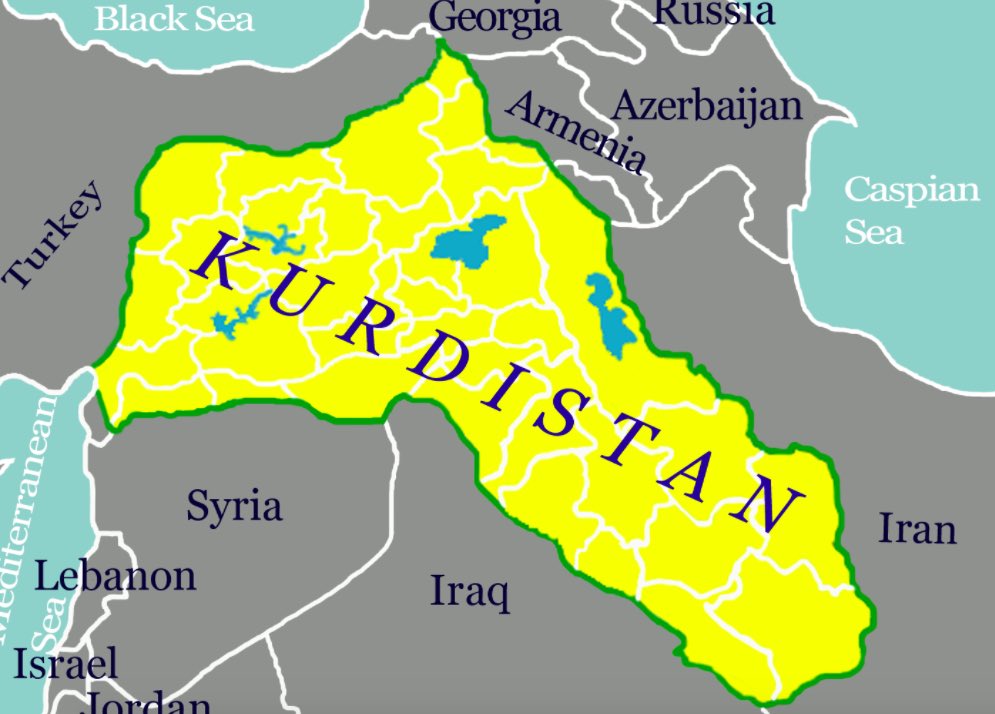
Where is Kurdistan?
Kurdistan is a mountainous geographical and cultural region in West Asia, spanning southeastern Turkey, northern Syria, northern Iraq, and northwestern Iran. It is the traditional homeland of the Kurdish people—the world’s largest stateless nation—with a population of roughly 30–45 million, characterized by distinct cultural identity and peoples.
Why is Kurdistan important
When the Syrian Civil war broke out in May 2011, and the ISIS group began occupying large parts of Syria and Iraq, the world watched on unsure of how to tackle an emerging Islamic Jihadi threat. This was partly due to the United States 20 year war in Afghanistan and also in Iraq, which had been met with large parts of oppositions from the Muslim world. On this occasion however, it was the Kurds of Kurdistan – in partnership with Western nations, who seized the intiative and took down the Jihadi threat, losing approximately 15,000 of their own fighters in the process. During the years that followed, they would effectively guard the prisons of battle hardened I.S mercenaries to neutralize a serious regional security threat.
What is situation on the ground currently in 2026-
The current President of Syria, President Ahmed Al-Sharaa, previously worked under both Al Qaeda and then later, the Islamic Caliphate. Since the fall of Bashar al Assad – the former President of Syria, al Sharaa has positioned himself as a moderate leader tolerant of the West. However, many questions remain; his pollical ambitions about a new ‘free Syria’ and whether; he has completely cut off the ties to his militia past.
The current situation on the ground is that Trump’s appointment of Tom Barrack as Special Envoy for Syria has now pushed the country to a dangerous tipping point. Previously, governance in North Syria (Kurdistan) was done autonomously by Kurdish forces. Recently, Tom Barrack reached an agreement in principle with Al-Sharaa to diminish Kurdish presence in North Syria and hand security back to the Syrian Army. This included an agreement in principle, that all Kurdish fighters would be integrated under one Army under a Syrian forces. Barrack has enabled attacks against the Syrian Democratic Forces (SDF) Syria’s most reliable anti-ISIS force while thousands of ISIS fighters and their families have been released, undoing years of hard-fought progress where a huge price was paid, where 15,000 Kurdish fighters fell to assert regional and global security. What was once a contained threat of ISIS is now re-emerging on the ground.
Why did Tom Barrack move to do what he did and reploy Kurdish forces to the north that have been so successful in neautralising ISIS? The consensus was to appease Turkey and his own Turkish origins. Unofficially, the US ambassador is appeasing the will of President Erdogan of Turkey. Mean that, even though Turkey views the Islamic Jihiadis as a security threat, that he would rather push back the borders of Kurdistan and expand Turkish borders and influence. Thereby nullifying any future possibility of a autonomous Kurdistan.
[What is the role of Turkish Military in Kurdistan?]
As of March 2026, the Turkish military’s role in Northern Syria has shifted from direct occupation to an institutional partnership with the new Syrian government. While most formerly occupied administrative areas were transferred to Syrian state control by late 2025, Turkey maintains a significant and indefinite military footprint to secure its national interests.
Core Objectives:
- Counter-Terrorism & Kurdish Autonomy: Turkey’s primary goal remains the neutralization of the Syrian Democratic Forces (SDF) and its main component, the YPG, which Ankara considers a terrorist extension of the PKK. The military presence aims to prevent the establishment of any autonomous Kurdish entity along Turkey’s southern border.
- Refugee Resettlement: Turkey uses its controlled “safe zones” to facilitate the return of some of the 3.3 million Syrian refugees currently in Turkey, though international monitors report that these areas often remain insecure.
- Infrastructure & Energy Security: The military protects critical cross-border infrastructure, such as the natural gas pipeline from Kilis to Aleppo, which is central to Turkey’s vision of becoming a regional energy hub.
Generated with assistance of Google AI.
While the Turkish Military occupies Northern Syria under a mutual partnership with the new Syrian government, it pis pushing back Kurdish forces. And it is willing to release ISIS mercenaries to achieve its objectives. The world owes the Kurds a lifetime of beers as down payment in dealing ISIS, when nobody wanted to touch the issue.